

Artisans · SP
ISTP: The Mechanic
Calm, hands-on problem-solver who learns by doing and stays cool under pressure.
Who is the ISTP?
ISTPs are quiet observers who spring into action when something needs fixing. They are curious about mechanics, tools and systems, and they learn best by trying things out. Give an ISTP a broken machine and they will happily figure it out.
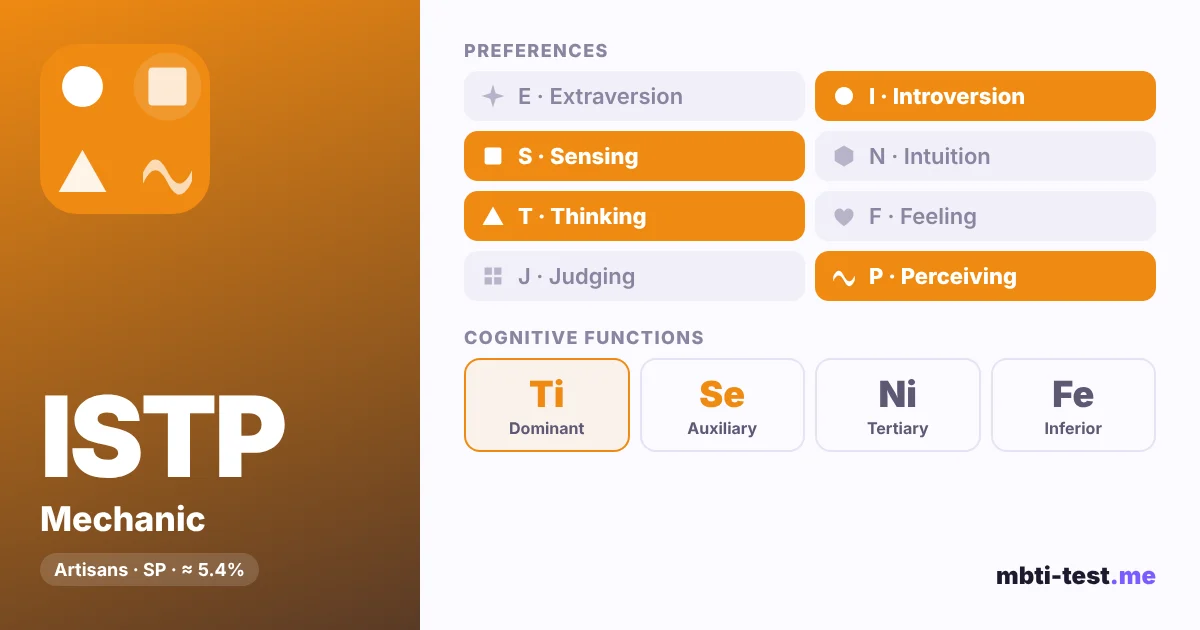
They are independent, adaptable and calm in emergencies. ISTPs do not waste words or emotions; they prefer to act. They value freedom and dislike being told what to do without good reason.
Their challenge is long-term planning and expressing feelings, which can make them seem distant to people who need more verbal reassurance.
Core ISTP traits
Hands-on
ISTPs learn by doing and enjoy practical skills.
Calm
They stay level-headed in a crisis.
Independent
They value freedom and their own space.
Logical
They analyze problems quickly and find efficient solutions.
Strengths & Blind spots
Strengths
- Excellent troubleshooter
- Calm under pressure
- Practical and realistic
- Adaptable
- Self-reliant
Blind spots
- Can be private and hard to read
- Easily bored
- Avoids long-term commitments
- Insensitive at times
- Takes risks
ISTP cognitive function stack
Cognitive functions describe how a type takes in information and makes decisions. The order matters:
- Ti
Introverted Thinking · Dominant
Builds an inner framework of logic. Wants to understand exactly how and why something works. (your core strength)
- Se
Extraverted Sensing · Auxiliary
Lives in the here and now. Notices sights, sounds and opportunities and reacts fast. (your supporting skill)
- Ni
Introverted Intuition · Tertiary
Sees where things are heading. Connects scattered clues into one clear insight or vision of the future. (your developing side)
- Fe
Extraverted Feeling · Inferior
Reads the emotional climate of a group and works to create harmony and connection. (your blind spot under stress)
ISTP in love & relationships
ISTPs are easy-going, loyal partners who prefer action to words. They show love by doing things together, fixing problems and giving their partner freedom. They dislike drama and pressure.
They need space and respect for their independence. ISTPs often match well with ESTJ and ESFJ partners, who bring structure and warmth.
ISTP as a friend
ISTPs are relaxed, low-maintenance friends who are always up for an activity, a project or a road trip.
ISTP at work
ISTPs thrive in hands-on, flexible roles that involve solving real problems. They are skilled with tools, machines and technology. Bureaucracy, endless meetings and rigid schedules frustrate them.
Best careers for ISTP
- Mechanic / technician
- Engineer
- Pilot
- Paramedic / firefighter
- Forensic scientist
- Software developer
- Carpenter
- Police detective
- Athlete / coach
- Electrician
ISTPs flourish where they can use their hands, their logic and their quick reactions.
ISTP under stress & growth tips
Under stress, ISTPs may fall into their inferior Extraverted Feeling: they can become emotional, feel unappreciated or lash out. Time alone and a physical activity help them reset.
- Tell people what you are thinking — they cannot see inside your head.
- Make a simple plan for long-term goals.
- Express appreciation in words occasionally.
- Consider the long-term consequences of risks.
Best matches for ISTP
These types often click with the ISTP because they share a way of seeing the world while balancing each other out.



Check ISTP compatibility with any type →
Often confused with: INTP – Theorist
If your result was close, compare the ISTP with the INTP. The two share some letters but use different functions.
Frequently asked questions
Are ISTPs rare?
ISTP is moderately common, at about 5% of the population, and more common among men.
What is the difference between ISTP and ESTP?
Are ISTPs emotionless?
No. ISTPs have strong feelings but tend to process them privately and express them through actions rather than words.
How rare is the ISTP personality type?
Estimates suggest that about 5.4% of people have ISTP preferences, which makes it a moderately common type. Exact numbers vary by country and study.