

Artisans · SP
ESTP: The Dynamo
Energetic, bold doer who thrives on action, risk and real-world challenges.
Who is the ESTP?
ESTPs live in the here and now. They are fast, bold and adaptable, and they love being where the action is. When something exciting happens, an ESTP is usually first on the scene.
They are practical problem-solvers who prefer doing to theorizing. ESTPs read people and situations quickly, which makes them persuasive negotiators and great in emergencies. Their humor and confidence make them popular.
Their challenge is patience and long-term planning. ESTPs may take risks without thinking through consequences or lose interest when things get slow.
Core ESTP traits
Action-oriented
ESTPs prefer to try things rather than discuss them.
Observant
They notice details and changes in their environment instantly.
Persuasive
They read people well and communicate with confidence.
Adventurous
They seek excitement, competition and new experiences.
Strengths & Blind spots
Strengths
- Energetic and bold
- Quick-thinking
- Practical problem-solver
- Sociable and fun
- Great in a crisis
Blind spots
- Impatient
- Takes risks
- Easily bored
- Can be insensitive
- Struggles with long-term plans
ESTP cognitive function stack
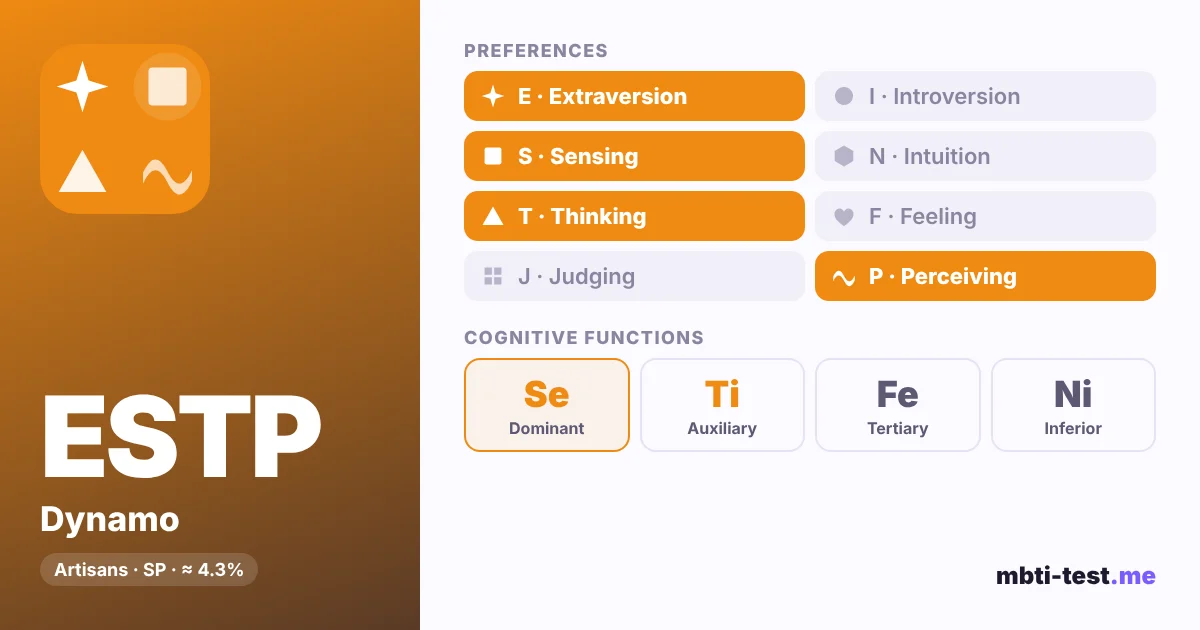
Cognitive functions describe how a type takes in information and makes decisions. The order matters:
- Se
Extraverted Sensing · Dominant
Lives in the here and now. Notices sights, sounds and opportunities and reacts fast. (your core strength)
- Ti
Introverted Thinking · Auxiliary
Builds an inner framework of logic. Wants to understand exactly how and why something works. (your supporting skill)
- Fe
Extraverted Feeling · Tertiary
Reads the emotional climate of a group and works to create harmony and connection. (your developing side)
- Ni
Introverted Intuition · Inferior
Sees where things are heading. Connects scattered clues into one clear insight or vision of the future. (your blind spot under stress)
ESTP in love & relationships
ESTPs are fun, spontaneous partners who keep relationships exciting. They show love through shared adventures, physical affection and practical help.
They need a partner who enjoys life and gives them freedom. ESTPs often match well with ISFJ and ISTJ partners, who bring stability and care.
ESTP as a friend
ESTPs are the life of the party and the friend who always has a plan for the weekend.
ESTP at work
ESTPs thrive in fast-paced, hands-on roles with variety and quick results. They excel in sales, entrepreneurship, emergency services and sports. Desk-bound, slow or highly theoretical work bores them.
Best careers for ESTP
- Entrepreneur
- Sales manager
- Paramedic / firefighter
- Police officer
- Athlete / coach
- Real estate agent
- Marketing executive
- Stockbroker
- Event promoter
- Construction manager
ESTPs flourish in careers with action, people and immediate, visible results.
ESTP under stress & growth tips
Under stress, ESTPs may fall into their inferior Introverted Intuition: they can become paranoid, imagine hidden meanings or feel a sense of doom about the future. Physical activity and time with friends help them reset.
- Pause before big decisions and think one step further.
- Practice patience with slower people.
- Set a long-term goal and track it.
- Ask how others feel about your plans.
Best matches for ESTP
These types often click with the ESTP because they share a way of seeing the world while balancing each other out.



Check ESTP compatibility with any type →
Often confused with: ESFP – Performer
If your result was close, compare the ESTP with the ESFP. The two share some letters but use different functions.
Frequently asked questions
Are ESTPs good leaders?
ESTPs can be effective leaders in fast-moving situations thanks to their quick thinking and confidence.
What is the difference between ESTP and ESFP?
Who is the best match for an ESTP?
ISFJs and ISTJs are often cited as balanced matches because they bring stability, while ESFPs share their energy.
How rare is the ESTP personality type?
Estimates suggest that about 4.3% of people have ESTP preferences, which makes it a moderately common type. Exact numbers vary by country and study.