

Guardians · SJ
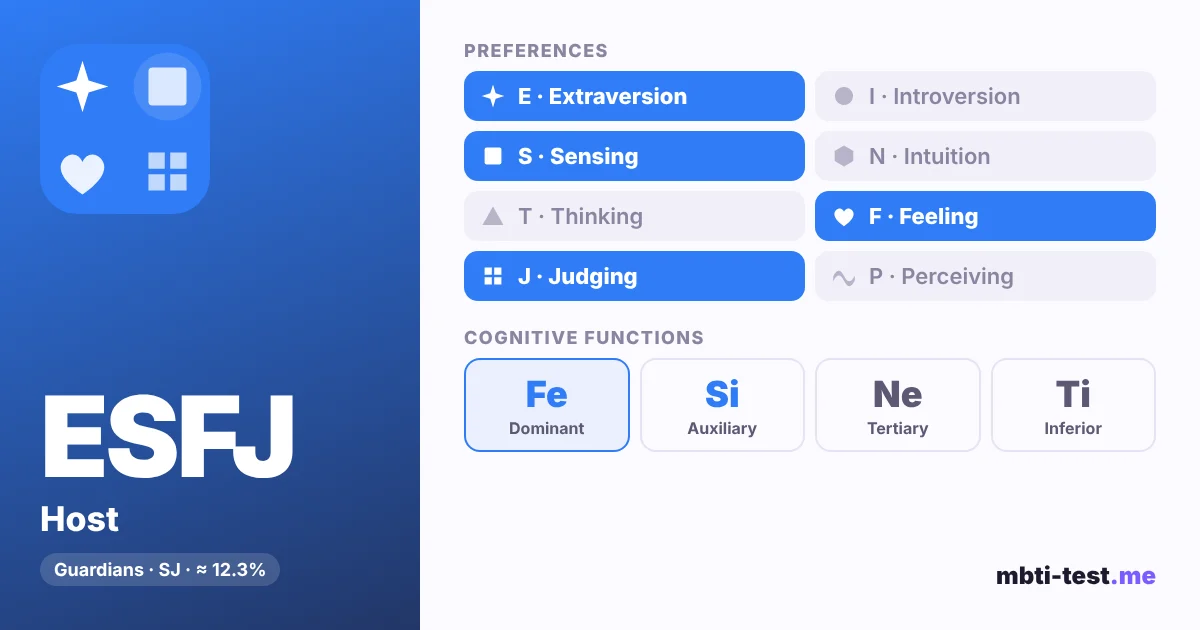
ESFJ: The Host
Caring, sociable helper who brings people together and makes everyone feel welcome.
Who is the ESFJ?
ESFJs are the people who make sure everyone has a drink, a seat and someone to talk to. They are attentive, friendly and generous, and they enjoy being part of a community. Helping others makes them happy.
They value tradition, loyalty and social harmony. ESFJs like clear expectations and want to do the right thing. They are often the organizers of family events, team celebrations and community projects.
Their challenge is not taking criticism personally and remembering that they cannot please everyone.
Core ESFJ traits
Warm
ESFJs are friendly, welcoming and attentive to others.
Practical helper
They meet real needs in concrete ways.
Community-minded
They enjoy being part of groups and traditions.
Organized
They like plans, schedules and clear roles.
Strengths & Blind spots
Strengths
- Caring and supportive
- Loyal and dutiful
- Excellent social skills
- Practical and reliable
- Creates harmony
Blind spots
- Needs approval
- Sensitive to criticism
- Can be overly involved in others' lives
- Resistant to change
- Avoids conflict
ESFJ cognitive function stack
Cognitive functions describe how a type takes in information and makes decisions. The order matters:
- Fe
Extraverted Feeling · Dominant
Reads the emotional climate of a group and works to create harmony and connection. (your core strength)
- Si
Introverted Sensing · Auxiliary
Remembers what has worked. Compares the present with rich personal experience and values routine. (your supporting skill)
- Ne
Extraverted Intuition · Tertiary
Sees what could be. Generates ideas, links and possibilities, and loves brainstorming. (your developing side)
- Ti
Introverted Thinking · Inferior
Builds an inner framework of logic. Wants to understand exactly how and why something works. (your blind spot under stress)
ESFJ in love & relationships
ESFJs are devoted, affectionate partners who enjoy making their loved ones feel cherished. They like traditional romance, shared routines and celebrating milestones together.
They need appreciation and emotional reassurance. ESFJs often match well with ISFP and ISTP partners, who bring calm independence, and with the dependable ESTJ.
ESFJ as a friend
ESFJs are the friends who organize reunions, bring soup when you are sick and keep everyone in touch.
ESFJ at work
ESFJs thrive in cooperative environments where they can help people and see the results. They are great at customer care, teaching, healthcare and organizing. Cold, competitive or isolated workplaces drain them.
Best careers for ESFJ
- Nurse / healthcare worker
- Teacher
- Event planner
- HR specialist
- Office manager
- Social worker
- Sales representative
- Customer service manager
- Receptionist / hospitality
- Dental hygienist
ESFJs flourish in roles that combine people, structure and visible helpfulness.
ESFJ under stress & growth tips
Under stress, ESFJs may fall into their inferior Introverted Thinking: they can become harshly self-critical or nitpicky about logic and details. Rest and reassurance from loved ones help them recover.
- Remember that disagreement is not rejection.
- Make decisions based on your values, not only on others' opinions.
- Try new experiences in small steps.
- Rest without feeling guilty.
Best matches for ESFJ
These types often click with the ESFJ because they share a way of seeing the world while balancing each other out.



Check ESFJ compatibility with any type →
Often confused with: ENFJ – Mentor
If your result was close, compare the ESFJ with the ENFJ. The two share some letters but use different functions.
Frequently asked questions
Are ESFJs common?
Yes. ESFJ is one of the most common types, at around 12% of the population.
What is the difference between ESFJ and ENFJ?
Are ESFJs good partners?
ESFJs are often warm, devoted and attentive partners who put effort into making their relationships work.
How rare is the ESFJ personality type?
Estimates suggest that about 12.3% of people have ESFJ preferences, which makes it one of the most common of the 16 types. Exact numbers vary by country and study.