

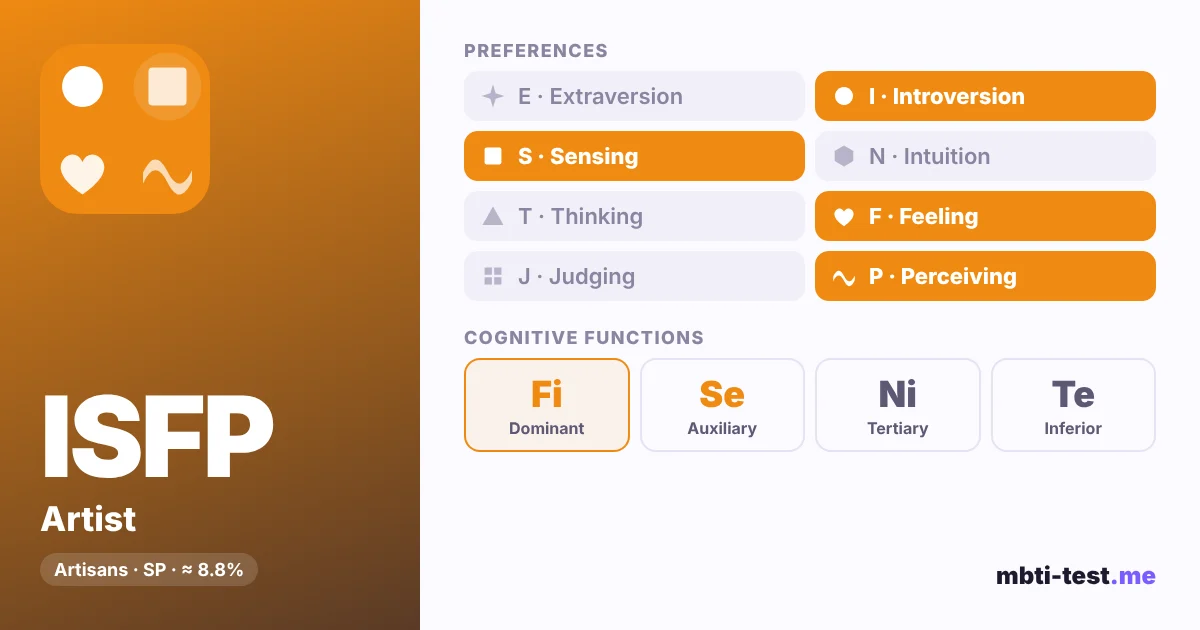
Artisans · SP
ISFP: The Artist
Gentle, sensitive creator who lives in the moment and expresses themselves through beauty.
Who is the ISFP?
ISFPs experience life through their senses: colors, sounds, textures and flavors. Many are artistic, whether they paint, design, cook, dance or simply dress with personal style. They express who they are through what they create.
They are kind, modest and loyal, with a strong inner sense of right and wrong. ISFPs prefer to live and let live, and they dislike conflict and pressure. They often support others quietly rather than seeking the spotlight.
Their challenge is planning for the future and speaking up for themselves, especially in competitive environments.
Core ISFP traits
Artistic
ISFPs have a strong sense of aesthetics and enjoy creating.
Gentle
They are kind, patient and accepting.
Present-focused
They enjoy the moment and adapt easily.
Value-driven
They follow their heart and personal ethics.
Strengths & Blind spots
Strengths
- Creative and artistic
- Caring and sensitive
- Flexible and open-minded
- Loyal
- Notices beauty and detail
Blind spots
- Avoids conflict
- Struggles with long-term planning
- Easily stressed by pressure
- Self-critical
- Hard to get to know
ISFP cognitive function stack
Cognitive functions describe how a type takes in information and makes decisions. The order matters:
- Fi
Introverted Feeling · Dominant
Follows an inner compass of personal values. Cares deeply about authenticity. (your core strength)
- Se
Extraverted Sensing · Auxiliary
Lives in the here and now. Notices sights, sounds and opportunities and reacts fast. (your supporting skill)
- Ni
Introverted Intuition · Tertiary
Sees where things are heading. Connects scattered clues into one clear insight or vision of the future. (your developing side)
- Te
Extraverted Thinking · Inferior
Organizes the outside world. Sets goals, measures results and makes things efficient. (your blind spot under stress)
ISFP in love & relationships
ISFPs are warm, devoted partners who show love through thoughtful actions and shared experiences. They value authenticity and want a partner who accepts them as they are.
They need gentleness and freedom. ISFPs often find great balance with ENFJ and ESFJ partners, who bring warmth and structure, and with the steady ESTJ.
ISFP as a friend
ISFPs are loyal, non-judgmental friends who enjoy quiet time together, creative activities and spontaneous outings.
ISFP at work
ISFPs thrive in flexible, creative roles where they can work with their hands or help people. They prefer supportive teams and dislike rigid rules and harsh competition.
Best careers for ISFP
- Graphic / fashion designer
- Photographer
- Chef
- Musician
- Veterinary assistant
- Nurse
- Physical therapist
- Interior designer
- Florist
- Tattoo artist
ISFPs flourish where creativity, care and freedom are valued.
ISFP under stress & growth tips
Under stress, ISFPs may fall into their inferior Extraverted Thinking: they can become uncharacteristically critical, harsh or obsessed with efficiency. Rest, nature and creative time help them recover.
- Set one long-term goal and break it into small steps.
- Speak up when something matters to you.
- Treat criticism as feedback on your work, not on you.
- Share your creations — they deserve an audience.
Best matches for ISFP
These types often click with the ISFP because they share a way of seeing the world while balancing each other out.



Check ISFP compatibility with any type →
Often confused with: INFP – Dreamer
If your result was close, compare the ISFP with the INFP. The two share some letters but use different functions.
Frequently asked questions
Are ISFPs artistic?
Many ISFPs have strong aesthetic sensitivity and enjoy creative activities, though their art can be anything from music to cooking to fashion.
What is the difference between ISFP and INFP?
Are ISFPs introverts?
Yes. ISFPs recharge alone, though they can be lively and playful with people they trust.
How rare is the ISFP personality type?
Estimates suggest that about 8.8% of people have ISFP preferences, which makes it one of the most common of the 16 types. Exact numbers vary by country and study.