

Guardians · SJ
ESTJ: The Organizer
Practical, decisive manager who brings order, rules and results to every group.
Who is the ESTJ?
ESTJs are natural administrators. They see what needs to be done, organize the people and resources to do it, and make sure everyone keeps their commitments. They believe in hard work, honesty and responsibility.
They are direct and decisive, and they prefer facts to feelings when making decisions. ESTJs respect traditions and institutions because they provide stability and order. They often take on leadership roles in their community, workplace and family.
Their challenge is flexibility. ESTJs can be quick to judge those who do things differently and may need to learn that there is more than one right way.
Core ESTJ traits
Organized
ESTJs create order, schedules and clear structures.
Direct
They say what they mean and expect clarity in return.
Dutiful
They take responsibilities seriously and keep promises.
Results-focused
They measure success by concrete outcomes.
Strengths & Blind spots
Strengths
- Strong leadership
- Reliable and dedicated
- Efficient and practical
- Honest and straightforward
- Good at enforcing standards
Blind spots
- Can be inflexible
- Impatient with inefficiency
- May seem bossy
- Uncomfortable with emotions
- Judges unconventional choices
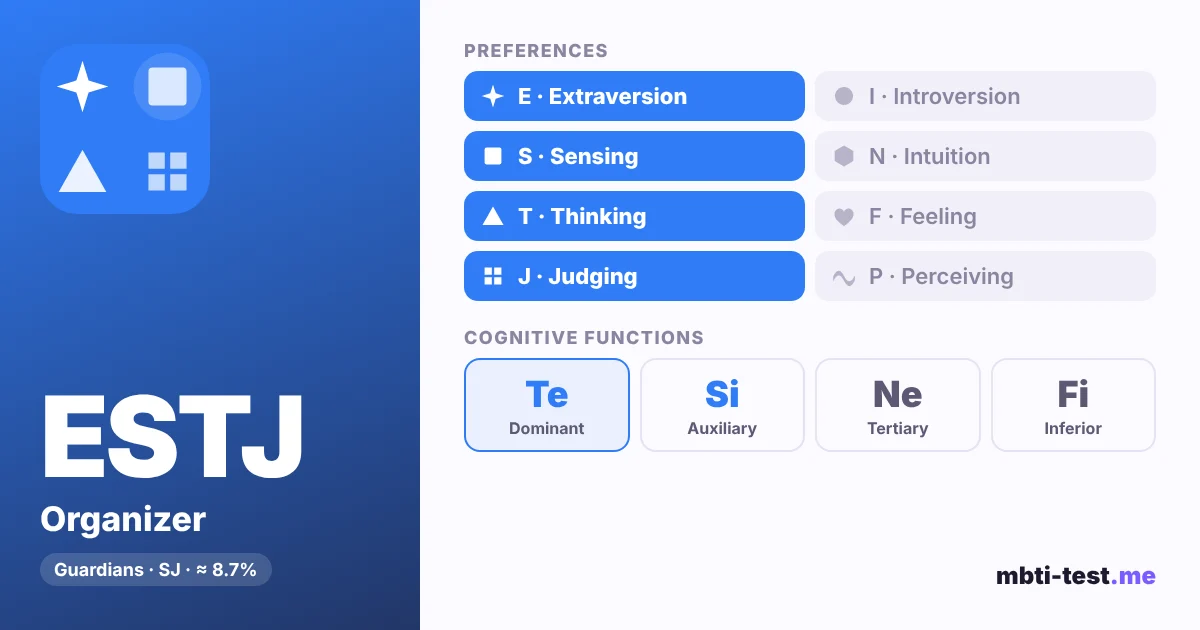
ESTJ cognitive function stack
Cognitive functions describe how a type takes in information and makes decisions. The order matters:
- Te
Extraverted Thinking · Dominant
Organizes the outside world. Sets goals, measures results and makes things efficient. (your core strength)
- Si
Introverted Sensing · Auxiliary
Remembers what has worked. Compares the present with rich personal experience and values routine. (your supporting skill)
- Ne
Extraverted Intuition · Tertiary
Sees what could be. Generates ideas, links and possibilities, and loves brainstorming. (your developing side)
- Fi
Introverted Feeling · Inferior
Follows an inner compass of personal values. Cares deeply about authenticity. (your blind spot under stress)
ESTJ in love & relationships
ESTJs are committed, dependable partners who take relationships seriously. They show love by providing stability, planning a shared future and taking care of practical matters.
They value honesty and loyalty above all. ESTJs often find great balance with ISTP and ISFP partners, who bring calm and flexibility, and feel understood by fellow traditionalists like the ESFJ.
ESTJ as a friend
ESTJs are loyal friends who organize get-togethers, give practical advice and stay reliable through the years.
ESTJ at work
ESTJs excel in management, administration and any role that requires organization and accountability. They thrive with clear hierarchies and measurable goals. Ambiguity and disorganization frustrate them.
Best careers for ESTJ
- Manager / supervisor
- Business administrator
- Financial officer
- Judge / lawyer
- Military officer
- School principal
- Project manager
- Insurance agent
- Operations director
- Property manager
ESTJs flourish in roles that reward leadership, structure and reliable delivery.
ESTJ under stress & growth tips
Under stress, ESTJs may fall into their inferior Introverted Feeling: they can feel unappreciated, hurt or overwhelmed by emotions they rarely express. Time off and honest talks with a close person help.
- Ask "is there another good way to do this?"
- Acknowledge feelings before jumping to solutions.
- Delegate and trust others' methods.
- Take time to relax without a goal.
Best matches for ESTJ
These types often click with the ESTJ because they share a way of seeing the world while balancing each other out.



Check ESTJ compatibility with any type →
Often confused with: ENTJ – Director
If your result was close, compare the ESTJ with the ENTJ. The two share some letters but use different functions.
Frequently asked questions
Are ESTJs good leaders?
ESTJs are often effective leaders thanks to their organization, decisiveness and reliability. They lead best when they also listen and adapt.
What is the difference between ESTJ and ENTJ?
Who is compatible with an ESTJ?
ISTPs and ISFPs are often cited as balanced matches, while ESFJs share their love of structure. Mutual respect matters most.
How rare is the ESTJ personality type?
Estimates suggest that about 8.7% of people have ESTJ preferences, which makes it one of the most common of the 16 types. Exact numbers vary by country and study.