

Guardians · SJ
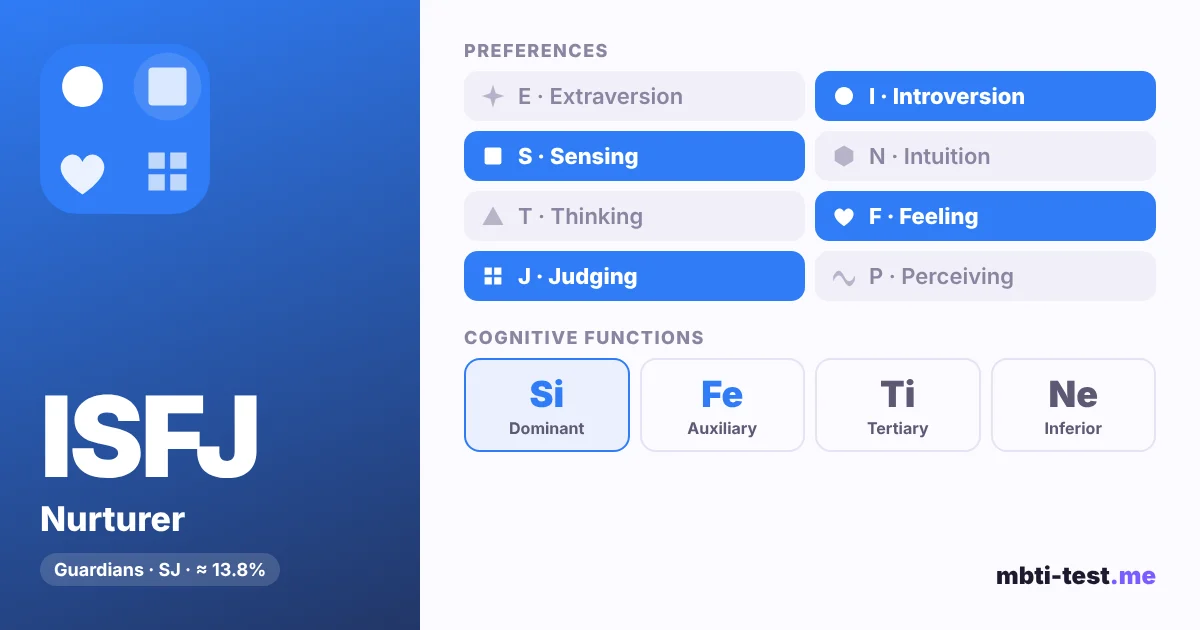
ISFJ: The Nurturer
Kind, loyal protector who quietly takes care of the people and things that matter.
Who is the ISFJ?
ISFJs are the quiet helpers who make life work for everyone else. They remember your favorite food, notice when you look tired and show up with exactly what you need. Their care is practical, consistent and sincere.
They value stability, tradition and harmony. ISFJs are hard-working and conscientious, often doing much more than their share without asking for recognition. They are modest and may underestimate how much others rely on them.
ISFJ is usually the most common type, at nearly 14% of the population. Their challenge is learning to say no and to value their own needs as much as everyone else's.
Core ISFJ traits
Caring
ISFJs genuinely enjoy helping and protecting others.
Observant
They remember details about people and their preferences.
Responsible
They take duties seriously and follow through.
Humble
They prefer working behind the scenes to seeking attention.
Strengths & Blind spots
Strengths
- Supportive and kind
- Reliable and patient
- Practical and detail-focused
- Loyal and devoted
- Good at creating harmony
Blind spots
- Struggles to say no
- Avoids conflict
- Resistant to change
- Takes criticism personally
- Overworks without asking for help
ISFJ cognitive function stack
Cognitive functions describe how a type takes in information and makes decisions. The order matters:
- Si
Introverted Sensing · Dominant
Remembers what has worked. Compares the present with rich personal experience and values routine. (your core strength)
- Fe
Extraverted Feeling · Auxiliary
Reads the emotional climate of a group and works to create harmony and connection. (your supporting skill)
- Ti
Introverted Thinking · Tertiary
Builds an inner framework of logic. Wants to understand exactly how and why something works. (your developing side)
- Ne
Extraverted Intuition · Inferior
Sees what could be. Generates ideas, links and possibilities, and loves brainstorming. (your blind spot under stress)
ISFJ in love & relationships
ISFJs are devoted, attentive partners who build a warm, safe home. They show love through care: cooking, remembering important dates, looking after their partner's comfort. They value commitment and long-term stability.
They need a partner who notices and appreciates their efforts. ISFJs often balance well with ESTP and ESFP partners, who bring energy and spontaneity, and feel at home with an ISTJ.
ISFJ as a friend
ISFJs are the friend who never forgets your birthday and is always there in a crisis. They value long, loyal friendships.
ISFJ at work
ISFJs thrive in roles where they can help others in practical ways and work in a stable, cooperative environment. They are careful, reliable and service-minded. High-conflict or chaotic workplaces drain them.
Best careers for ISFJ
- Nurse
- Elementary school teacher
- Administrative manager
- Social worker
- Family doctor
- Librarian
- HR assistant
- Pharmacist
- Childcare worker
- Customer success manager
ISFJs flourish in careers that combine care for people with clear structure and responsibility.
ISFJ under stress & growth tips
Under stress, ISFJs may fall into their inferior Extraverted Intuition: they imagine everything that could go wrong and feel overwhelmed by uncertainty. Talking it through and returning to familiar routines help them recover.
- Practice saying "no" kindly but clearly.
- Ask for help before you are exhausted.
- Try one small change at a time to build comfort with the new.
- Remember: your needs count too.
Best matches for ISFJ
These types often click with the ISFJ because they share a way of seeing the world while balancing each other out.



Check ISFJ compatibility with any type →
Often confused with: ISTJ – Realist
If your result was close, compare the ISFJ with the ISTJ. The two share some letters but use different functions.
Frequently asked questions
What is the most common personality type?
ISFJ is generally reported as the most common type, at about 13–14% of the population.
What is the difference between ISFJ and ESFJ?
Are ISFJs introverts?
Yes, ISFJs recharge through quiet time, although they are warm and attentive in social situations.
How rare is the ISFJ personality type?
Estimates suggest that about 13.8% of people have ISFJ preferences, which makes it one of the most common of the 16 types. Exact numbers vary by country and study.